















Single Pair Ethernet SPE industrial automation

Single Pair Ethernet (SPE) - Compact Network Solutions for Industry 4.0 and IIoT


One Pair of Wires - An Infinite Number of Applications

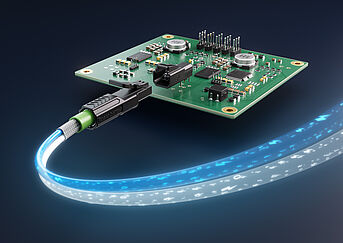
Single Pair Ethernet (SPE) reduces data transmission to a single twisted pair of wires and enables:

  • Data rates of up to 1 Gbps
  • Transmission distances of up to 1,000 meters
  • Power over Data Line (PoDL) and hybrid installations using the same cable
  • Multidrop networks for flexible topologies

This significantly reduces cabling effort, and in many cases, existing infrastructure can continueto be used.

SPE establishes unified, Ethernet-based communication from the sensor to the cloud and is considered a key technology for Robotics, Industry 4.0 and IIoT. Benefits such as space, weight, and costsavings make SPE ideal for industrial and commercial applications.

With the upcoming IEC 63171-7 ED2 standard, future-proof solutions are emerging that optimally prepare networks for the requirements of Industry 4.0 and IIoT.

 

Trends shaped by Rosenberger from Automotive to Industry

Rosenberger - established as a leading manufacturer of connectivity systems for Single Pair Ethernet products in the automotive industry - offers a wide range of products specifically designed to meet the requirements of SPE in the vehicle, such as MTD® and H-MTD®. Space-saving (miniaturized), lightweight and robust differential connector systems that meet today's mechanical and environmental requirements.

Originally developed for automotive applications, SPE now offers the perfect balance of speed, distance and power for a wide range of IoT projects. Based on familiar Ethernet and TCP/IP protocols, SPE extends the reach of Ethernet everywhere - even to sensors located in the most remote corners of the system or in the field. Power over Data Line (PoDL) ensures that sufficient power is available to power a wide range of IoT components and sensors.

Industry often requires special solutions. These include longer cable runs, higher electromagnetic compatibility (EMC) and specific industrial protocols. To meet these requirements, Rosenberger is actively involved in the development and implementation of SPE standards and products.

Many years of experience with SPE technologies and products in the automotive industry are transferred to industrial applications. This makes Rosenberger the ideal partner for Single Pair Ethernet.

Whitepaper: Ethernet in the Automotive world


SPE - simply explained

Single Pair Ethernet (SPE) simplifies data transmission by using just a single wire pair for communication. While traditional Ethernet often reaches its limits on the field level – due to complex installation, limited range, or lack of robustness – SPE provides a streamlined, efficient, and reliable alternative.

Benefits of Single Pair Ethernet (SPE)

  • Unified communication: End-to-end Ethernet-based networking from the sensor to the cloud
  • Standardized & future-proof: Based on international standards (IEC 63171-7 ED2)
  • Efficient infrastructure: Reduced cabling effort; existing installations can often be reused
  • Extended range: Data transmission up to 1,000 m
  • High data rates: Supporting speeds up to 1 Gbps
  • Power over Data Line (PoDL): Simultaneous transmission of data and power
  • Resource-saving design: Lower weight, smaller bend radius, and compact dimensions

SPE creates a simplified infrastructure and is regarded as a key technology for Industry 4.0, Roboticsand the Industrial Internet of Things (IIoT).


What are Single Pair Ethernet Connectors?

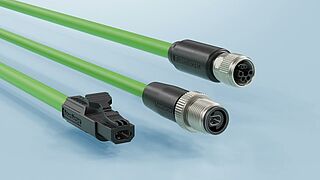
Single Pair Ethernet (SPE) connectors meet the requirements of modern industrial networks. They reliably transmit both data and power (PoDL)over just a single twisted pair.

With their low weight, small bend radius, and compact design, they are ideal for the miniaturization of modern devices.

SPE connectors are based on international standards (IEC 63171), enabling easy integration of sensors, actuators, and other devices into Industrial Ethernet infrastructures for robotics, factory automation, Industry 4.0, and IIoT.

Rosenberger SPE connectors are specifically designed for industrial requirements:

  • Compact IP20 solutions for device connections
  • Rugged IP67 variants for harsh environments
  • Compliant with IEC 63171-7 ED2
  • Data rates up to 1 Gbps

For more technical detals, please visit the product page


The new IEC 63171-7 ED2 Standard: Paving the Way for SPE Success

The new IEC 63171-7 ED2 standard – initiated by the PROFIBUS User Organization (PNO) – forms the basis for the success of Single Pair Ethernet (SPE). Together with other PNO members, Rosenberger is actively driving the development of future-oriented SPE connectors.

The standard defines a universal mating face for both control cabinet and field applications. It ensures future-proof, multi-vendor interoperability and establishes the basis for the widespread, global adoption of SPE technology.

Only through unified standards can SPE unlock its full potential – and achieve long-term success in industrial and commercial applications.


Where are the application areas of Single Pair Ethernet (SPE)?


Factory Automation

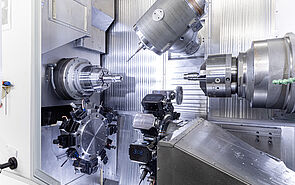
Seamless communication from the sensor to the cloud is essential in the factory automation. Comprehensive data networking and analysis are necessary to predict maintenance cases, plan raw material requirements, and efficiently implement individual customer requests. The challenge lies in ensuring that data is transmitted reliably and quickly. It is also vital that it functions quickly and reliably over longer transmission distances, and that it is easy and flexible to integrate into both IT and OT.

Ethernet down to field level with SPE and PoDL

Single Pair Ethernet (SPE) opens up new possibilities for industrial production and communication. It provides reliable Ethernet connectivity via a single twisted pair of cables, reaching directly up to the sensor and actuator level. This reduces space requirements, simplifies installation, and enables the creation of consistent IP-based networks. SPE is used in areas such as intelligent device communication, sensor technology, and monitoring, for example for barcode readers, camera systems, and user interfaces.

Another advantage is that Power over Data Line (PoDL) enables power and data to be transmitted via a single cable. This eliminates the need for separate power cabling, saving time, costs and space.

Future-proof infrastructure for Industry 4.0

SPE and PoDL enable standardised, Ethernet-based communication from sensors to the cloud. As key technologies, they pave the way for a new generation of industrial automation that is powerful, compact and networked. Automation


Robotics

Precise and fast data transmission is essential in modern robotics. This enables complex movements, real-time control and interaction with the environment.

In addition, space and weight savings are decisive factors for mobile or collaborative robots. Rigid cabling restricts the flexibility of robot arms, accelerates wear and tear, and limits their use in confined or dynamic environments. Lighter, slimmer cabling can significantly increase the agility and service life of systems. As sensors and actuators transmit and require power, a compact, flexible power supply is essential.

One cable. Two functions

Single Pair Ethernet (SPE) optimises miniaturisation of communication infrastructure in robotics. Compared to classic fieldbus systems, SPE provides:

  • Higher bandwidths that enable fast and reliable communication between the robot arm and controller, even for large data volumes.
  • Compact cabling via a single twisted pair of cables, which is ideal for tight installation conditions in end-of-arm tools.
  • PoDL functionality, which transmits data and power over the same cable. This reduces the complexity, weight and space requirements of the robot structure.

Increased manoeuvrability for robotics

Combining SPE and PoDL allows for the development of powerful robotic systems with leaner, more flexible and durable cabling. This improves manoeuvrability, reduces maintenance costs, and makes integration into flexible production environments easier β€” a decisive step towards flexible robotics.


Sensors and Actuators

The increasing automation of industrial processes results in a constantly growing number of sensors and actuators. These need to communicate reliably and quickly over long distances. In addition, they often operate in space-critical or hard-to-access areas. As well as requiring a stable power supply, they also need a standardised connection to higher-level systems β€” from the field level to the cloud.

Single Pair Ethernet (SPE) and the PoDL standardize device connections

Single Pair Ethernet (SPE) is a forward-looking solution that enables Ethernet communication via two wires in a single cable, connecting directly to sensors and actuators. The standardized interface allows the integration of the smallest field devices, which can be operated over long distances (up to 1000 metres) without signal amplifiers. In combination with Power over Data Line (PoDL), data and power can be run over the same cable. This eliminates the need for additional power lines and significantly reduces cabling costs β€” a decisive advantage when integrating sensors, detection modules, or actuator systems.

Typical applications:

Temperature, pressure and proximity sensors
Barcode and image processing systems
Actuators, valves and dosing systems
HMI elements and operating units at field level

Lean, connected and ready for the future

SPE and PoDL provide an efficient, space-saving and scalable infrastructure for sensors and actuators. Whether in robotics, building automation or networked production environments: This technology enables the integration of smart devices in line with the principles of Industry 4.0.


The Single Pair Ethernet System Alliance

Rosenberger collaborates with leading companies from the connector industry, automation technology and the cable sector as part of the Single Pair Ethernet System Alliance. The goal is to further develop and promote Single Pair Ethernet technology. Through close cooperation and focused knowledge sharing, partners from around the world are combining their expertise to drive its advancement and adoption of SPE technology across various applications. Together, we are shaping and driving this future-proof Ethernet technology.

More about SPE System Alliance


FAQ: Questions about Single Pair Ethernet (SPE) and SPE Connectors

What is the key feature of Single Pair Ethernet (SPE)?

SPE transmits both data and power (Power over Data Line – PoDL) via a single twisted pair instead of four pairs used in traditional Ethernet. This enables simpler, lighter, and more cost-efficient network infrastructures - from the field level to the cloud.

Is SPE compatible with traditional Ethernet?

Yes, SPE is compatible with classic Ethernet architectures. By using media converters or switches with SPE ports, it can be integrated into existing networks. Standardized SPE connectors ensure interoperable and seamless communication.

Which SPE connector is the right choice?

The right connector depends on the application environment. For consistent and future-proof communication, standardized SPE connectors should be used. 
Non-standard versions can be suitable for specialized use cases, but standardized SPE connectors according to IEC 63171-7 ED2 ensure long-term compatibility, interoperability and investment security.

Why is SPE particularly interesting for industrial automation and robotics?
  • Reduced cabling effort and lower installation costs
  • Compact, lightweight connectors
  • Slimmer cables and smaller bend radius
  • Longer transmission distances for sensors and actuators
  • Unified network technology from field to control level
Can SPE also transmit power (PoDL)?

Yes. Power over Data Line (PoDL) allows simultaneous transmission of data and power over the same pair of wires. 
This eliminates the need for separate power supplies and simplifies network design.

How complex is the transition from traditional Ethernet to SPE?

On the hardware side, compatible PHYs, connectors, and cables are required. On the software side, no changes are necessary, as the Ethernet protocol remains the same.

Which markets benefit most from SPE?

SPE provides advantages in numerous industries, including:

  • Industrial and process automation
  • Robotics
  • Building automation
  • IoT and IIoT applications.
How is the ecosystem of SPE-enabled devices (sensors, actuators, controllers) evolving?

The SPE ecosystem is growing: the first sensors, actuators, and controllers with SPE interfaces are already available. An increasing number of manufacturers are integrating SPE ports, particularly into industrial and IoT devices.


Your partner for SPE

Our specialist will be happy to explain the relevance of Single Pair Ethernet as a key technology for the Industrial Internet of Things (IIOT).

Product Manager Industries

Thomas Keller

Rosenberger Hochfrequenztechnik GmbH & Co. KG
Hauptstraße 1
83413 Fridolfing
Germany

Phone: +49 8684 18-1952

Fax: +49 8684 18-1499